दिवाली पर निबंध (Essay on Diwali in Hindi) – दीपावली पर निबंध हिंदी में
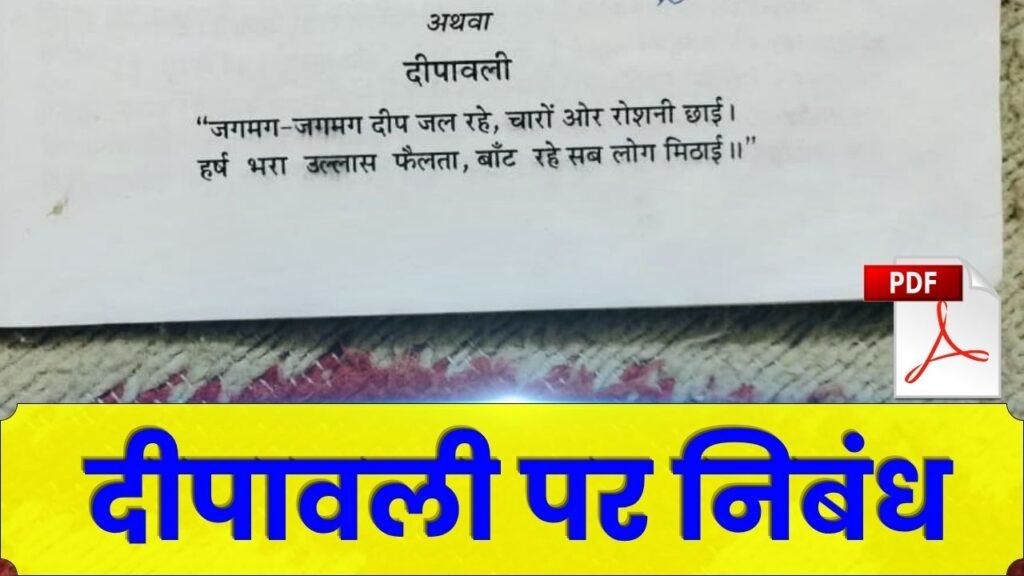
“जगमग जगमग दीप जल रहे, चारों ओर रोशनी छाई।
हर्ष भरा उल्लास फैलता, बाँट रहे सब लोग मिठाई ॥”
रूपरेखा:
(1) प्रस्तावना- हमारे त्यौहार,
(2) मनाने के आधार-व्यापारिक, सामाजिक और सांस्कृतिक,
(3) दीपावली का महत्त्व,
(4) दीपावली मनाने की विधि तथा संलग्न त्यौहारों का वर्णन,
(5) उपसंहार।]
प्रस्तावना – मनुष्य उत्सव प्रिय है, इसीलिए समाज में प्रत्येक ऋतु में आमोद-प्रमोद के लिए किसी-न-किसी त्यौहार या मेले के आयोजन का विधान किया है। शरद ऋतु का महत्त्वपूर्ण त्यौहार दीपावली है, जो कार्तिक माह की अमावस्या को मनाया जाता है। दीपावली शब्द का अर्थ है-दीप + अवलि अर्थात् दीपों की पंक्ति। इस दिन घर, गली, नगर, ग्राम सभी दीपकों के आलोक से प्रकाशित होते हैं। मिठाइयाँ बाँटी जाती हैं।
दीपावली जोश, आनन्द तथा स्वच्छता का त्यौहार है। यह जागृति तथा स्फूर्ति का अग्रदूत है। अन्धकार से आवृत्त विश्व को प्रकाश का सन्देश देता है। निरन्तर प्रकाश का प्रेरणा स्त्रोत बनकर आगे कदम बढ़ाने की प्रेरणा प्रदान करता है।
त्यौहार मनाने के आधार: दीपावली मनाने के कारण अनेक हैं। व्यापारी इस दिन को शुभ मानते हैं। धन त्रयोदशी के दिन व्यापारी पुराने वर्ष का लेखा-जोखा तैयार करते हैं तथा इस शुभ दिन से नवीन बही आरम्भ करते हैं। दीपावली जिस समय मनायी जाती है, उस समय खरीफ की फसल तैयार होती है। ज्वार, बाजरा, मक्का आदि किसान के घर आते हैं। उसका हृदय उल्लास से भरा होता है। इसी उल्लास में यह दीपावली का उत्सव मनाया जाता है।
दीपावली मनाने की विधि तथा संलग्न त्यौहारों का वर्णन: दीपावली मनाने के अन्य कारणों में कई कथाएँ सम्मिलित हैं। एक कथा के अनुसार ऐसा माना जाता है कि 14 वर्ष के बाद वनवास की अवधि समाप्त करके, रावण पर विजय प्राप्त कर रामचन्द्रजी इसी दिन अयोध्या लौटे थे। उनके स्वागत में अयोध्यावासियों ने भारी हर्ष और उल्लास के साथ खुशियाँ मनार्यों और अपने घरों पर दीपक जलाकर प्रकाश किया।
एक अन्य कथा के अनुसार इसी दिन गौतम बुद्ध को ज्ञान प्राप्त हुआ था। जैन धर्म के चौबीसवें तीर्थंकर महावीर स्वामी का निर्वाण दिवस यही था। इस कारण से इस त्यौहार पर दीप जलाकर् प्रकाश किया जाता है।
दीपावली मनाने का महत्त्व: दीपावली मनाने के कारण कुछ भी हों, परन्तु विविध दृष्टियों से यह त्यौहार विशेष महत्त्व का है। सफाई की दृष्टि से विचार करें तो वर्षा ऋतु में विभिन्न प्रकार के छोटे-छोटे जीव तथा जीवाणु पैदा हो जाते हैं। अतः सर्वत्र गन्दगी का साम्राज्य हो जाता है। इस त्यौहार पर सब घरों की सफाई करते हैं। गन्दे वातावरण को शुद्ध करने के लिए दीपक जलाये जाते हैं। दीपकों से उठने वाली लौ और गैस विषाक्त जीवाणुओं को नष्ट कर देती है और रोग के जीवाणुओं को मारती है। इस प्रकार स्वस्थ वातावरण के लिए इस त्यौहार का एक विशेष महत्त्व है।
यह पर्व भौतिक तथा आध्यात्मिक प्रकाश का सन्देश लेकर आता है। दीपावली मनुष्य की सम्पन्नता तथा प्रगति का त्यौहार है; उल्लास, आनन्द और कल्याण का अवसर है।
त्यौहार मनाने की विधि- यह त्यौहार पाँच दिन तक मनाया जाता है। इसका प्रारम्भ धन-तेरस से होता है। यह वैद्यराज धनवन्तरि का अवतार दिवस है। चतुर्दशी को छोटी दीपावली मनाते हैं। तीसरे दिन अमावस्या को मुख्य त्यौहार होता है। इस दिन वृद्ध, युवा तथा बच्चों में
प्रातःकाल से ही उत्साह होता है। बड़े लोग अपने दायित्वपूर्ण कार्यों में लगते हैं। बालकों को मिठाइयाँ, खिलौने, आतिशबाजी मुग्ध कर देती हैं। पटाखे चलाकर धूम मचाते बच्चे अपना आनन्द प्रकट करते हैं। इस दिन विविध प्रकार के व्यंजन बनाये जाते हैं। सभी सुन्दर, स्वच्छ और नवीन कपड़े पहनते हैं। शाम के समय दीपमालाओं से घरों में प्रकाश किया जाता है। घर-घर मिठाइयाँ वितरित की जाती हैं। रात्रि को घर के सभी लोग लक्ष्मीजी का पूजन करके कामना करते हैं कि धन की वृद्धि हो, कुछ परिवारों में रात्रि का जागरण करते हैं। मान्यता है कि रात्रि को लक्ष्मी देवी आयेंगी और जिस घर में प्रकाश होगा, उसी में वे प्रवेश करेंगी।
त्यौहार के चौथे दिन गोवर्द्धन पूजा होती है। इस दिन अन्नकूट तैयार किया जाता है। प्रसिद्ध है कि जब ब्रज के विनाश के लिए इन्द्र क्रोधित होकर वर्षा करने लगे तब समस्त ब्रजमण्डल में गोवर्द्धन की पूजा की गयी, जिससे ब्रज की रक्षा हुई और इन्द्रदेव का अभिमान चूर हुआ। गोवर्द्धन पूजा के द्वारा पालतू पशुओं गाय, भैंस, बैल आदि का सम्मान किया जाता है। पाँचवें दिन भ्रातृ-द्वितीया (भइया दौज) को बहनें अपने भाइयों के टीका करके उनके दीर्घजीवी होने की कामना करती हैं। इसके बदले में भाई बहन को वस्त्र, धन आदि देकर उनका सम्मान करते हैं। इससे स्नेहभाव में वृद्धि होती है।
उपसंहार – इस त्यौहार के साथ-साथ समाज में कुछ दोष भी आ गये हैं। इस अवसर पर लोग जुआ खेलते हैं, शराब पीते हैं। इस बुरे वातावरण को समाज से दूर करना चाहिए, जिससे त्यौहार की पवित्रता तथा उपयोगिता स्थिर रह सके। दीपावली का त्यौहार सुख, समृद्धि एवं आलोक (प्रकाश) का त्यौहार है। हमें इस दिन व्रत लेना होगा कि हम केवल बाहरी स्वच्छता ही न करें अपितु हृदय को भी स्वच्छ तथा पवित्र बनायें। धरा पर कहीं अन्धकार की छाया दृष्टिगोचर न हो।
“Lamps are glowing brightly, spreading light all around;
Joy and jubilation abound, as people share sweets.”
Outline:
(1) Introduction – Our Festivals,
(2) Reasons for Celebration – Commercial, Social, and Cultural,
(3) Significance of Diwali,
(4) How Diwali is Celebrated and Associated Festivals,
(5) Conclusion.
Introduction – Humans have an inherent love for celebrations; hence, society has established various festivals or fairs in every season to provide joy and entertainment. Diwali is a significant festival of the autumn season, celebrated on the *amavasya* (new moon day) of the month of *Kartik*. The word ‘Diwali’ is derived from *deep* (lamp) + *avali* (row), meaning ‘a row of lamps.’ On this day, homes, streets, towns, and villages are illuminated by the light of lamps, and sweets are distributed.
Diwali is a festival of enthusiasm, joy, and cleanliness. It serves as a harbinger of awakening and vitality, bringing a message of light to a world shrouded in darkness. It acts as a constant source of inspiration, encouraging us to move forward.
Reasons for Celebration: There are many reasons for celebrating Diwali. For the business community, this day is considered highly auspicious. On *Dhan Trayodashi* (Dhanteras), traders finalize the accounts of the passing year and begin new account books. Furthermore, Diwali coincides with the harvest of the *kharif* crops; as grains like sorghum (*jowar*), pearl millet (*bajra*), and maize arrive in the farmers’ homes, their hearts are filled with joy—a joy that finds expression in the celebration of Diwali.
How Diwali is Celebrated and Associated Festivals: The celebration of Diwali is also rooted in various legends and stories. According to one legend, it is believed that Lord Ram returned to Ayodhya on this very day after completing his 14-year exile and achieving victory over Ravana. To welcome him, the people of Ayodhya celebrated with great joy and enthusiasm, illuminating their homes by lighting lamps.
According to another account, it was on this day that Gautama Buddha attained enlightenment. It also marks the day of *Nirvana* (liberation) of Mahavira Swami, the twenty-fourth *Tirthankara* of Jainism. For these reasons, the festival is celebrated by lighting lamps.
The significance of celebrating Diwali: Regardless of the specific reasons behind its origin, this festival holds great importance from various perspectives. In terms of cleanliness, the rainy season often leads to the proliferation of small organisms and bacteria, resulting in widespread uncleanliness. During this festival, people clean their homes, and lamps are lit to purify the environment. The flames and gases produced by these lamps help eliminate harmful microorganisms and disease-causing bacteria. Thus, the festival plays a significant role in fostering a healthy environment.
This festival brings a message of both physical and spiritual light. Diwali is a celebration of human prosperity and progress—an occasion for joy, happiness, and well-being.
How the festival is celebrated: The festival spans five days, beginning with *Dhanteras*, which marks the incarnation day of Lord Dhanvantari (the deity of medicine). The fourteenth day (*Chaturdashi*) is celebrated as *Chhoti Diwali* (Small Diwali). The main festival falls on the third day, the *Amavasya* (new moon night). From the early morning, people of all ages—the elderly, the youth, and children—are filled with excitement. Adults attend to their various responsibilities, while children are delighted by sweets, toys, and fireworks. Children express their joy by setting off firecrackers. On this day, a wide variety of dishes and delicacies are prepared. Everyone wears beautiful, clean, and new clothes. In the evening, homes are illuminated with rows of lamps (deepmala). Sweets are distributed from house to house. At night, family members worship Goddess Lakshmi and pray for an increase in wealth; in some households, people stay awake throughout the night (jagaran). It is believed that Goddess Lakshmi will visit during the night and enter only those homes that are illuminated.
The fourth day of the festival is marked by Govardhan Puja, during which ‘Annakoot’ (a ceremonial offering of various food items) is prepared. Legend has it that when Lord Indra, in a fit of rage, unleashed torrential rain to destroy the Braj region, the people of Braj worshipped Govardhan; this act saved the region and shattered Indra’s pride. Through Govardhan Puja, domestic animals—such as cows, buffaloes, and oxen—are also honored. On the fifth day, ‘Bhratri-Dwitiya’ (Bhaiya Dooj) is celebrated; sisters apply a ’tilak’ on their brothers’ foreheads and pray for their long lives. In return, brothers honor their sisters by gifting them clothes, money, and other tokens of affection, which strengthens the bond of love between them.
Conclusion – Along with the festival, certain social evils have also crept in; for instance, some people engage in gambling or consume alcohol. Such negative influences should be eradicated from society to preserve the sanctity and true purpose of the festival. Diwali is a celebration of happiness, prosperity, and light. On this day, we should take a pledge not only to ensure external cleanliness but also to purify our hearts. Let there be no shadow of darkness anywhere on earth. In the words of the poet ‘Neeraj’—